How Long Does Content Creation Really Take? A Brand’s Guide to Planning Visual Content
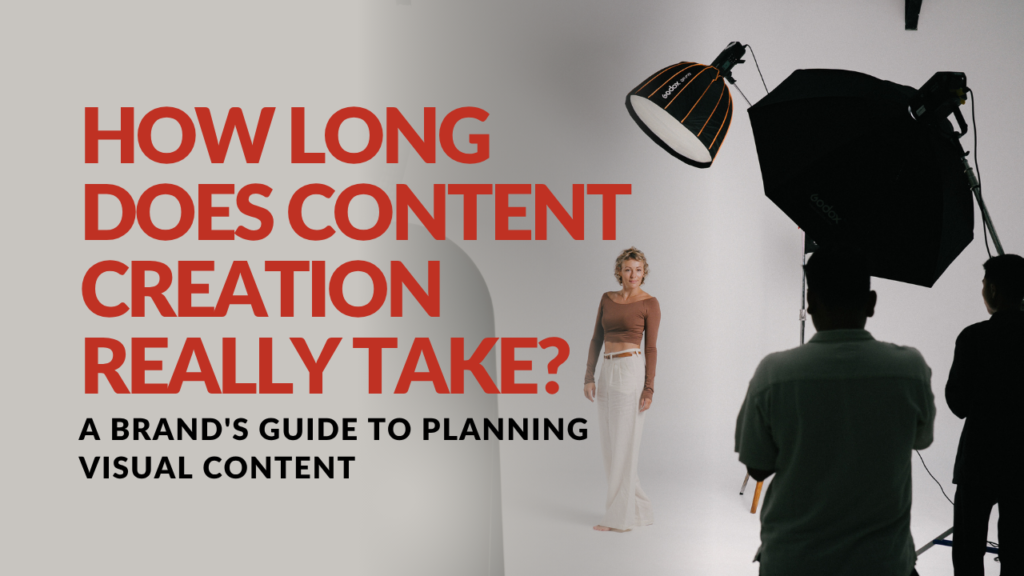
Most content you see on social media is less than 1 minute. But do you know how long it actually takes to create that 1 minute? Well, the answer depends on the quality you’re going for. Take a look at how long a movie takes to make. Most Hollywood 90-minute films take about 2.5 years to produce. That means every 1 minute of that movie takes nearly 10 days to make. Content creation is not much different. The more quality you need, the longer it takes. The goal is to find the right balance. Being efficient with time while keeping the quality good enough to publish and proud of. Based on our experience handling brands every year, we have a simple formula for creating stunning visuals with proper planning. 1. Audit — 1 Day Before we do anything else, a brand audit is necessary to get the content planning right. First we need to understand your business. What your brand is, your products or services, and your positioning. Then we talk about your goals. Where you are right now and where you want to be. 2. Strategize — 2 Days We analyze everything from the audit and find the best and most tangible way to move forward. We build your content direction, analyze competitors, find out what’s working based on real research and trends, and apply it to your brand. Every decision is intentional before production begins. 3. Pre-Production — 2 Days Ticking every box in pre-production before the shoot is a must. Starting from validating the ideas from the strategy — checking if they’re executable — then location scouting, creating storyboards, mood references, lighting setup, equipment list, crew list, talent, production schedule, and more. 4. Production — 1 Day When every step above is done correctly, the production day is actually the easiest part. But always leave room for error. No matter how well you plan, something will go wrong. If everything is done right beforehand, expect only minor ones. 5. Editing — 3 Days Without editing, there is no value in what you shot. Proper editing is necessary. But timelines can stretch longer than expected, so setting a limit is important. For us, 8 video reels in 3 days is our benchmark for ready-to-post content. That’s a minimum of 9 days to create content the right way. And that’s just one batch; 8 reels and 100 pictures. Content creation is a full-time job. As a marketer or business owner, it’s not something you should be doing alone. Lucky for you, that’s exactly what we do. Hit us up and we can talk through the rest. DM us or visit https://levera.id to get started.
Top 4 Industries in Bali That Are Growing — And Why Visual Content Is No Longer Optional
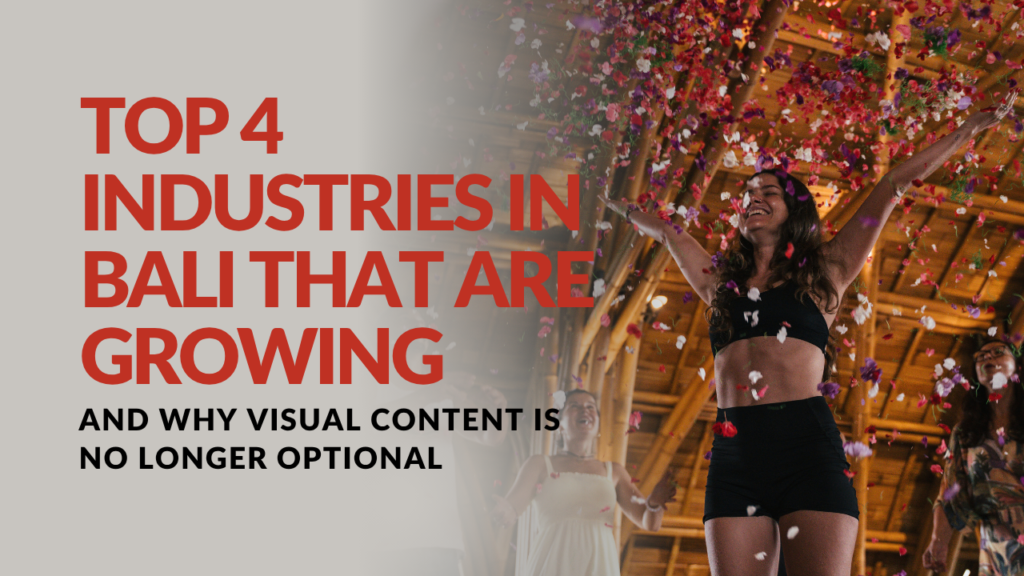
If you’re running a brand in Bali right now, you’re in one of the most exciting markets in Southeast Asia. Tourism is breaking records, new businesses are opening every month, and international money is flowing in from every direction. Especially those of you running in these 4 industries: F&B, Hospitality, Fashion, and Wellness. But here’s the challenge; a growing market doesn’t automatically mean growing revenue for your brand. The more the market grows, the more competition shows up. And the brands that win are the ones that take their branding seriously. With years of experience working with brands across every industry, we keep seeing the same problem. Great products, great services, but an inconsistent and underwhelming visual system that doesn’t do justice to what they’re actually offering. So let’s talk about the top 4 industries in Bali, where they’re headed, and why visual content is becoming the most important investment you can make right now. 1. F&B (Food & Beverage) If you ever visit Seminyak, Canggu, Ubud, Sanur, or Uluwatu, you will see a growing number of restaurants and cafes. That’s not surprising at all since the data shows that F&B makes up 21.75% of Bali’s entire economy. Meaning more than 20% of Bali’s revenue comes from F&B. That’s good for your business, right? It is. This data confirms you’re in the right industry. However, the problem is that more cafes and more restaurants means more competition. Consumers today are not just looking for food. They are looking for an experience. How you concept that experience and communicate it to your audience before they ever visit is the key to winning. With that in mind, we still notice that most F&B brands in Bali rely on walk-ins and Google Maps. Very few have a consistent content system that communicates their ambience, their story, and their brand identity. If your competitor looks better online than you do, they get the booking. It’s that simple. 2. Hospitality (Hotels, Villas & Resorts) Bali welcomed approximately 7 million foreign tourists in 2025 — a 9.7% increase over 2024. Villas dominate 87% of total property supply, with rental yields hitting 7–15% annually in prime locations. Sounds great, right? Not until you look at the other side of those numbers. Airbnb listings grew 18% year-on-year, topping 39,000 listings. Average discount rates jumped from 15% in 2024 to nearly 19% in 2025. Booking values dropped 21.6% year-on-year. More tourists, but thinner margins. Bali does not have a demand problem. It has a supply problem. The properties that are winning are the ones that invest in brand identity and professional visual content. Industry leaders confirmed it at Villa Finder’s 2025 event, the path forward is to treat your villa like a business. And the first thing any business needs is to look like one. 3. Fashion Indonesia’s luxury fashion market hit USD 3.04 billion in 2024, and Bali is one of the key markets driving it. International premium brands are taking notice, with significant growth in store openings across major tourist areas. Local Bali fashion brands — swimwear, resort wear, artisan labels — are now competing directly with international brands for the same audience. And that audience today makes purchasing decisions based heavily on how a brand looks online. Fashion is the most visual-dependent industry there is. If your photography is inconsistent — mixing iPhone shots with professional content — your brand perception is fragmented. And fragmented brands don’t command premium prices. The good thing is, the international market is coming to Bali, and your local brand could go international as well. With the right strategy, that’s not just wishful thinking. 3. Wellness Bali’s wellness tourism market is growing at 30% annually. 68% of visitors prioritize spa treatments and wellness activities during their stay. The spa industry alone has grown over 160% since 2003, with approximately 390 spas now operating on the island. Bali is also Asia Pacific’s second-largest yoga retreat market, behind only India. The demand is real and it’s growing fast. And yes you guessed it right. So is the supply. Wellness is an industry that sells transformation, serenity, and experience. Things that are almost impossible to communicate through visuals alone. A systematic content system covering the venue, the teachers’ expertise, and client testimonials is the bare minimum to get your brand into your potential customers’ consideration. The good news is that most wellness brands in Bali are severely underproducing content relative to how much their experience deserves to be shown. That means you still have the right timing to make your brand stand out. Every single industry in Bali is growing. And every single industry is getting more crowded at the same time. That means competing on price is a race to the bottom. The only sustainable way to differentiate is through how your brand looks, feels, and shows up consistently online. Visual content for brands in Bali is no longer a nice to have. It’s the thing that determines whether a customer chooses you or the business next door. If you’re not sure where your brand stands right now, we offer a free brand audit. We’ll take a look at your current digital presence and tell you exactly what’s working and what’s not. DM us or visit https://levera.id to get started.
Why Bali Villa Owners Need to Stop Competing on Price and Start Competing on Brand
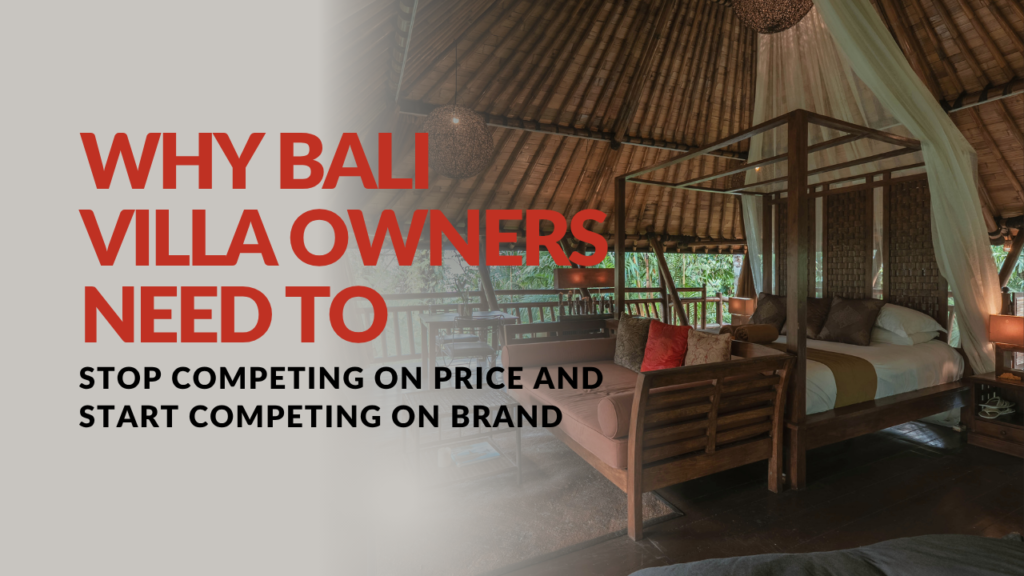
Bali has been one of the top growing property markets in recent years, with significant growth in visitors, listings, and occupancy rates. Based on Villa Finder, in 2025 Bali welcomed approximately 7 million foreign tourists, a 9.7% increase over 2024. But Airbnb supply grew 18% year-on-year, topping 39,000 listings, with average discount rates jumping from 15% in 2024 to nearly 19% in 2025, and booking values down 21.6% year-on-year. What this means is simple: Bali does not have a demand problem. It has a supply problem. With the surge of villa listings, property owners now have to step up their approach to stand out and hit their revenue targets. Industry leaders at Villa Finder’s 2025 event confirmed that the path forward is to treat the villa like a business, which means investing in brand identity, professional photography, and reputation management to compete in an increasingly crowded market. With 6 years of industry experience in digital marketing, branding, and content production, we found there are 3 basic ways proven to increase occupancy rates for your property. 1. Fix The Website Start by asking yourself some questions. Does my website already represent my niche? Do I have a hero video to make a strong first impression? Do I have the right message and tagline to represent my brand with the right keywords? If a visitor can’t understand what your brand is and what you’re selling within 30 seconds, you’ve already lost them. The easiest fixes are: Add hero message and tagline. Add a video on the landing page to lower bounce rate. Update the photos at least once every semester. Publish blogs regularly with updated visuals. 2. Fix The Google When you search your niche on Google, does your property appear in the top 5? If not, you’re likely missing customers. The quickest fix is using Google Ads to put your listing at the top whenever someone searches your niche. But the quick way isn’t always the best way. The best way to do it is: Align all branding. Including name and tagline should be consistent across every platform. Set the correct business category. Add an active phone number with a response time of under 2 hours. List the correct products or services. Put in the correct address. Actively respond to reviews and ask for them. You could package it as a free breakfast or coffee in exchange for a review. Regularly update your Google photos. 3. Fix The Social Media Honestly, social media is not the most direct way to get your property booked. However, it is the right place to build brand awareness and stay visible to your audience. Since almost everyone is on social media on a daily basis. To do it correctly you need: Match every element. This means logo, hero message, and tagline with your website and Google profile. Add a Linktree that connects to your website, WhatsApp for direct bookings, and your OTA listings. Regularly upload content in different formats. Carousels, reels, and single images. Run paid ads. BONUS 4. Fix The OTA Listings This is the most direct way to get your property booked. On OTA platforms, you need to update your content regularly and actively manage your reviews. Some of the main OTA platforms are Booking.com, Expedia, Airbnb, Traveloka, and others. These are the same 4 pillars we’ve been executing for our clients over the past 6 years. At Levera, we specialize in digital marketing, branding, and content production specifically for the hospitality and property industry in Bali. From fixing your website visuals and Google presence to managing your social media content and production. We build the system so you don’t have to figure it out alone. If you want to know where your property stands right now, we offer a free brand audit to identify exactly what’s holding your occupancy back. DM us or visit https://levera.id to getstarted.
Talking Head Content: 3 Types Every Brand Should Know in 2026
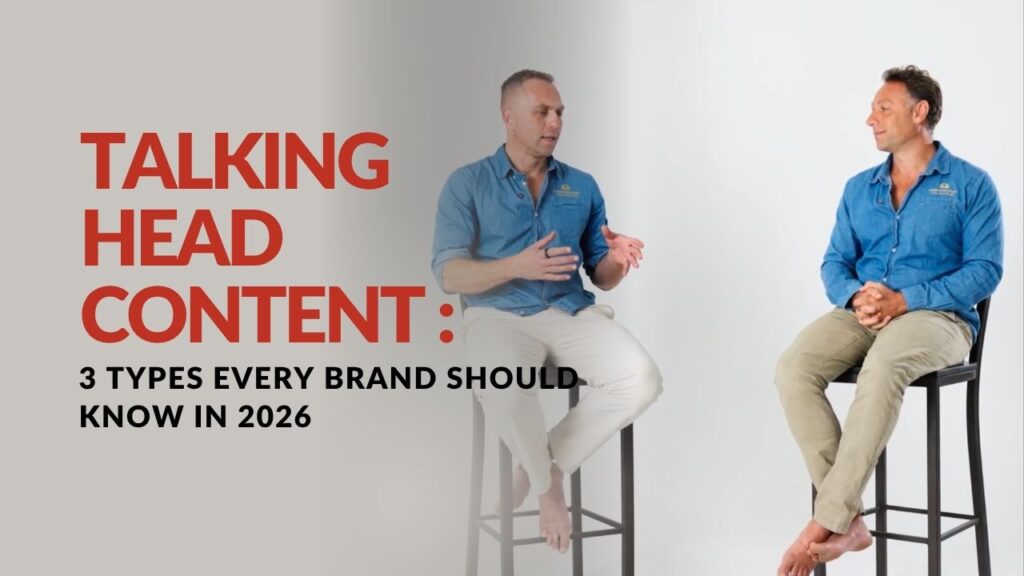
Talking head content is on the rise. Wherever you look on social media, there will always be someone creating this kind of content. I don’t blame them, because it is honestly the easiest way to get your message across to your target audience. If your business is not creating talking head content, I think you’re seriously missing out in 2026. I’m sure most of you know what talking head content is. But before we go ahead, let me just define it so we’re on the same page. Talking head content is a video format where a subject talks about a topic. It could be about their business, their expertise to build authority, a customer testimonial to build trust, or simply an offer or a thank you message. With the rise of talking head content, creators are constantly fighting for audience attention. So being creative about it is a must if you want to cut through. Here are 3 types of talking head content you can use to get your message across. 1. The Simple Talking Head Content As you might guess, the simple talking head is just a person talking to camera without heavy editing. This works well if you’re already confident that your target audience is tuned in and watching. The best use case for this is an offer or a thank you letter. A white background with a simple setup works best. The simpler it is, the easier it is for your audience to receive the message. Like with any talking head format, a proper audio recorder is necessary. One last tip: if you’re using a white background, have the subject wear simple non-white clothing. 2. The Edited Talking Head Content The edited talking head is where you add effects to immediately catch your audience’s attention and retain them until your message lands. There are multiple ways to do this, but I suggest creating a standard set of rules to follow so that it stays consistent and doesn’t come across as cheap. First, get your typography rules right. Same font, same size, same color, and same usage. Unless you have a word or two that needs to be highlighted. Even that needs a consistent rule for how you handle it. Second, keep your animated visual frame rules consistent. Choose 3 animations you will use across all your content and stick with them. For example: zoom in and zoom out to highlight a specific word, light leak for transitions, and a logo at the end. Third, once your visuals are consistent, do the same for audio. Same rules apply. Choose 3 audio effects and stick with them. For example: music genre, typing effect, and an occasional meme sound for humor. 3. The Interview Talking Head Content The interview talking head is kind of underrated. In my opinion, it is one of the best ways to get your message understood. Because the way it is framed feels more natural and conversational. However, this format tends to run long and most of the time is not suitable for social media audiences who are looking for faster-paced content. That is why creativity is needed to deliver your message efficiently. The first way to handle this is to find the golden words and cut everything else. That way, your audience doesn’t have to sit through the whole thing, only the important parts. The second way is to add B-roll that supports what the subject is talking about. For example: if they’re talking about their villa, cut to a glimpse of the room and its facilities. That being said, creating talking head content is all about consistency and a clear message. Happy creating. We can help you create talking head. Go to our homepage and fill in the free audit form.